
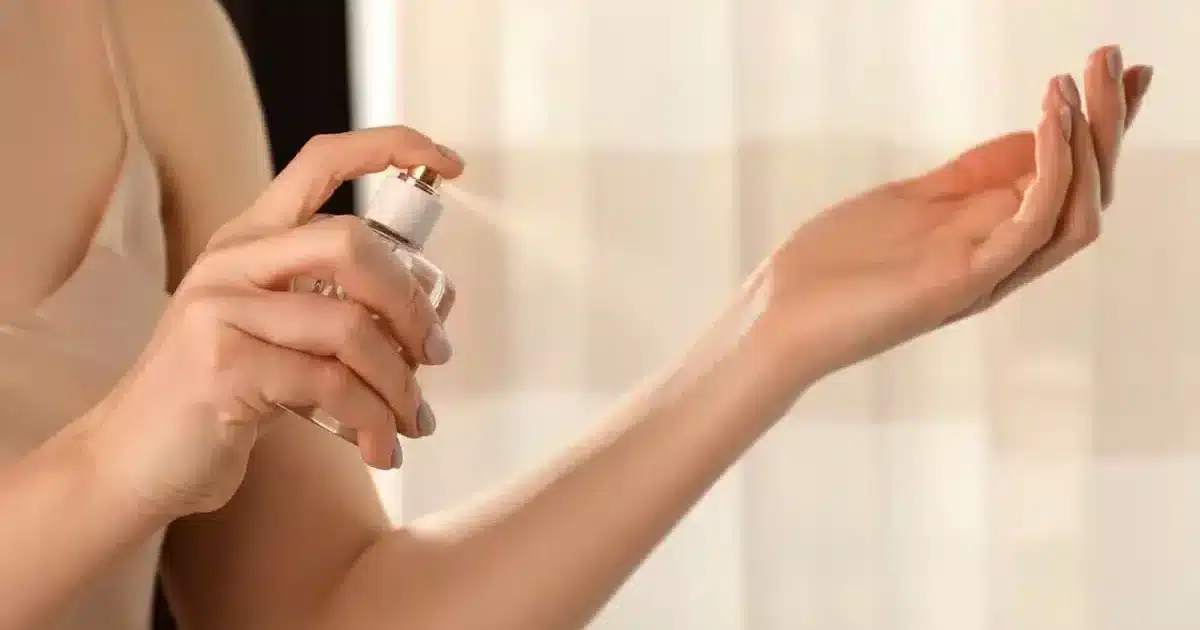
Making perfume last all day comes down to a few key habits most people get wrong. Rubbing your wrists together, spraying too much on pulse points, applying fragrance to dry or exposed skin — these common mistakes silently kill your scent before noon. The fix is simpler than you think.
Most people treat perfume application as an afterthought. A quick spray on the wrists, maybe a mist on the neck, and out the door. But that routine, however automatic, works against the fragrance itself. The molecular structure of a perfume is more fragile than its price tag suggests, and the way you apply it determines everything about how long it stays with you.
Perfumery experts point to a handful of consistent mistakes that shorten a scent's lifespan dramatically. Understanding why they happen, and what to do instead, changes the entire experience.
The wrist-rubbing habit is actively damaging your fragrance
This is the most widespread mistake in perfume application, and it feels so natural that most people never question it. You spray on one wrist, press the two together, maybe rub them gently. Done. But that friction generates heat, and heat breaks down the top notes of a fragrance — the first and most volatile molecules that define the opening impression of a scent.
How friction degrades top notes
The rubbing motion doesn't just warm the skin. It creates a mechanical disruption that alters the molecular structure of the perfume itself. The result is a shorter projection, a reduced trail, and sometimes a scent that smells noticeably different from what you applied. Those lighter, brighter opening notes — citrus, green, or floral accords — are the first to go. What remains is a flattened version of the fragrance, missing the complexity it was designed to deliver.
What to do instead on pulse points
Apply and leave it. Spray on the inner wrists, let the fragrance settle on its own. The natural warmth of pulse points — the inner elbows, behind the knees, inside the ankles, along the clavicles, behind the ears — is actually an asset. These areas radiate heat steadily, which diffuses the scent upward and outward throughout the day. The trick is to rotate between several of these points rather than concentrating everything in one spot. Too much fragrance on a single pulse point creates an overwhelming effect up close and burns through the formula faster.
Dry skin is the silent enemy of fragrance longevity
Perfume evaporates. That's its nature. But on dry skin, evaporation happens at a much faster rate because there's nothing to anchor the fragrance molecules. Oily skin, by contrast, retains scent naturally. The lipids in the skin act as a binding layer that slows evaporation and extends the life of the fragrance. On low-humidity days or when skin is particularly dry, a perfume that normally lasts six hours might disappear before lunch.
Applying a thin layer of unscented moisturizer or a small amount of petroleum jelly (Vaseline) to pulse points before spraying your perfume creates a binding base that significantly slows evaporation and preserves the sillage throughout the day.
The key word here is unscented. A scented lotion introduces competing fragrance molecules that interfere with the perfume's own ingredients. A neutral base, whether a plain body lotion or a thin coat of vaseline, acts purely as a physical substrate. Apply it to the target zones, let it absorb for a moment, then spray the perfume on top. The difference in longevity is noticeable from the first try.
This technique matters even more for eau de toilette formulas, which have a lower concentration of aromatic compounds than eau de parfum. If you're wearing a lighter concentration and need it to carry through a full day, the moisturized-base method compensates for what the formula itself can't provide.
The neck and décolleté are riskier than they seem
Spraying perfume on the neck feels intuitive — it's close to the face, it projects well in conversation, and it's a classic application point. But the neck and décolleté are among the most exposed areas of the body. Movement, body heat, and perspiration all accelerate evaporation there, meaning the fragrance often fades well before midday.
There's also the question of skin sensitivity. Perfumes contain alcohol, and repeated application to the neck or décolleté, especially in warm weather, can cause irritation or redness on sensitive skin. Touching the fragrance after applying it to the neck — adjusting a collar, rubbing the skin — compounds the problem by disrupting the scent layer.
The better alternative is to shift application toward less exposed zones. Behind the ears works well because the area is sheltered and warm. The inner elbows and the back of the knees are particularly effective because they're covered by clothing for much of the day, which traps the scent and releases it gradually with movement.
Spraying on clothing extends wear — with conditions
Fabric holds fragrance longer than skin in many cases. Cotton and wool are especially effective at capturing and retaining scent molecules. Spraying a light mist on clothing from a sufficient distance — never directly against the fabric — adds another layer of diffusion that carries the fragrance throughout the day even after skin application has faded.
Some perfume formulas can stain delicate fabrics, particularly those containing darker colorants or high concentrations of certain aromatic compounds. Always test on an inconspicuous area first, and avoid spraying directly onto silk or light-colored synthetics.
Synthetic fabrics present a different problem: they can trap scent molecules in a way that distorts the fragrance, making it smell heavier or off-key compared to how it performs on skin. The fragrance was formulated to interact with skin chemistry, and synthetics change that equation. Stick to natural fibers for clothing application, and never saturate — one or two light passes from a distance is enough.
Proper storage preserves the fragrance you paid for
How you store your perfume affects how long it performs on your skin, even before you open the bottle. Heat, light, and humidity are the three main degradation factors. The bathroom, where most people keep their fragrances, combines all three. The temperature fluctuations from hot showers, the ambient moisture, and the exposure to light all accelerate the breakdown of aromatic compounds. A perfume stored in the bathroom for a year may lose a significant part of its character and projection.
The solution is straightforward: keep bottles in a cool, dark place — a bedroom shelf, a drawer, or a dedicated storage box. The original packaging provides an extra layer of protection against light. Sealing the bottle tightly after each use prevents oxidation, which is another slow killer of fragrance quality. A well-stored perfume maintains its intended performance for years. A poorly stored one starts losing its edge within months, making every other application tip less effective by default.