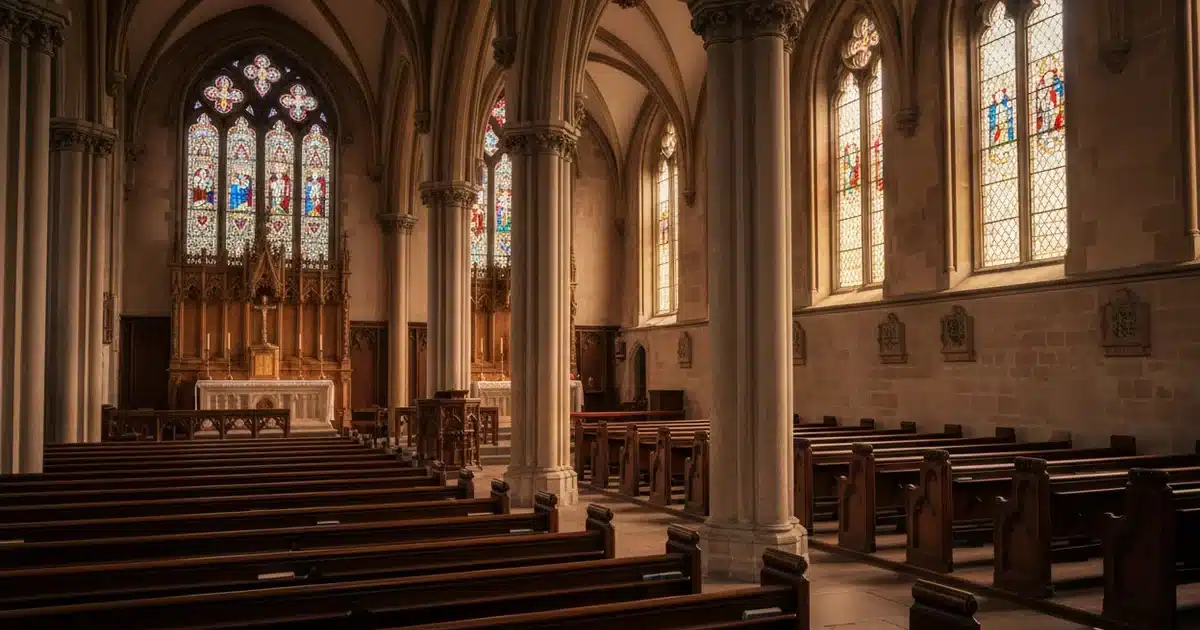
Episcopal Churches are the American expression of the Anglican tradition — rooted in the Church of England, shaped by the American Revolution, and defined today by a distinctive blend of liturgical worship, episcopal governance, and progressive social engagement. They sit at a crossroads between Catholic structure and Protestant theology, making them one of the most theologically nuanced denominations in Christianity.
The Episcopal Church often flies under the radar in public discourse about American religion. It lacks the cultural ubiquity of evangelical megachurches and the institutional weight of Roman Catholicism. But its influence on American civic life, social justice movements, and interfaith dialogue is real and documented. Understanding what Episcopal Churches are means understanding a tradition that has quietly shaped presidents, universities, and communities for over 250 years.
Origins and history of the Episcopal Church
The Episcopal Church did not emerge from a theological revolt. It emerged from a political one. When the American colonies declared independence from Britain in 1776, members of the Church of England living in the new nation faced an immediate problem: their church was, by definition, tied to the British Crown. Clergy swore oaths of allegiance to the king. That arrangement became untenable overnight.
From the Church of England to an American institution
The solution was elegant in its simplicity. American Anglicans reorganized themselves as an independent body, severing the political link to the Crown while preserving the theological and liturgical inheritance. In 1789, the Protestant Episcopal Church in the United States of America was formally constituted, adopting its own version of the Book of Common Prayer and establishing a governance structure suited to a republic rather than a monarchy.
The name itself carries meaning. "Episcopal" derives from the Greek episkopos, meaning bishop or overseer. The church is governed by bishops — a direct line of continuity with the ancient Catholic and Orthodox traditions. But unlike Rome, the Episcopal Church places that episcopal authority within a democratic framework of elected clergy and lay representatives.
A tradition older than the denomination
The Anglican tradition behind Episcopalianism goes back to 1534, when King Henry VIII broke with Rome and established the Church of England. What followed was a century of theological turbulence — Protestant reformers, Catholic counter-movements, Puritan pressures — that eventually produced the via media, the "middle way" that defines Anglican identity to this day. Neither fully Catholic nor fully Reformed, the tradition deliberately holds tensions rather than resolving them.
This history matters because it explains why Episcopal Churches feel different from other Protestant denominations. The liturgy, the vestments, the sacramental emphasis — these are not affectations. They are the inheritance of a tradition that never fully broke with its Catholic roots.
Doctrine and practices that define Episcopal worship
Doctrine in the Episcopal Church is less a fixed catechism and more a lived practice. The tradition famously operates on the principle of lex orandi, lex credendi — the law of prayer is the law of belief. What the church believes is expressed primarily through how it worships.
The Book of Common Prayer as theological anchor
The Book of Common Prayer is the central document of Episcopal identity. First compiled by Archbishop Thomas Cranmer in 1549, revised multiple times over the centuries, and adapted for American use in 1789 (with major revisions in 1979), it provides the liturgical framework for every Sunday service, every baptism, every funeral. The prayers are not improvised. They are inherited, communal, and deliberate.
This emphasis on shared liturgy creates a theological consistency that transcends individual congregations. An Episcopalian moving from Boston to Atlanta will recognize the same structure of worship, the same cadences of prayer. The community is held together not by a creed enforced from above but by a common practice.
Episcopal governance and the role of bishops
Governance in the Episcopal Church follows a three-tiered structure: bishops, priests, and deacons. Bishops hold apostolic authority and oversee dioceses — geographic regions that may contain dozens of individual parishes. But the Episcopal model is not hierarchical in the Roman Catholic sense. Bishops are elected, not appointed from above. The General Convention, which meets every three years, is the supreme governing body and includes both a House of Bishops and a House of Deputies composed of elected clergy and laypeople.
The Episcopal Church operates through a bicameral General Convention — a House of Bishops and a House of Deputies. Both houses must concur for any measure to pass, giving laypeople and clergy genuine legislative power alongside bishops.
The sacraments hold central importance. Baptism and the Eucharist are the two primary sacraments, with the Eucharist celebrated at most Sunday services. The theology is broadly sacramental — the physical elements of bread and wine are understood as genuine vehicles of grace, not merely symbolic acts. This places Episcopal practice closer to Catholic and Lutheran traditions than to most evangelical Protestantism.
On questions of scripture, the Episcopal Church holds that the Bible contains "all things necessary to salvation" but does not insist on literal inerrancy. Reason and tradition stand alongside scripture as sources of theological authority — the so-called "three-legged stool" associated with Richard Hooker, the 16th-century Anglican theologian.
Social and community engagement as a defining commitment
If liturgy is the internal identity of the Episcopal Church, social engagement is its external face. The denomination has a long and sometimes controversial history of taking positions on civic and political questions that other churches prefer to avoid.
A track record on civil rights and justice
The Episcopal Church's engagement with the civil rights movement was significant and costly. Many Episcopal clergy and laypeople marched alongside Martin Luther King Jr. The denomination's social justice commitments have extended to advocacy on poverty, immigration, healthcare access, and environmental protection. The Episcopal Relief and Development organization operates in dozens of countries, providing disaster response, food security programs, and community development work.
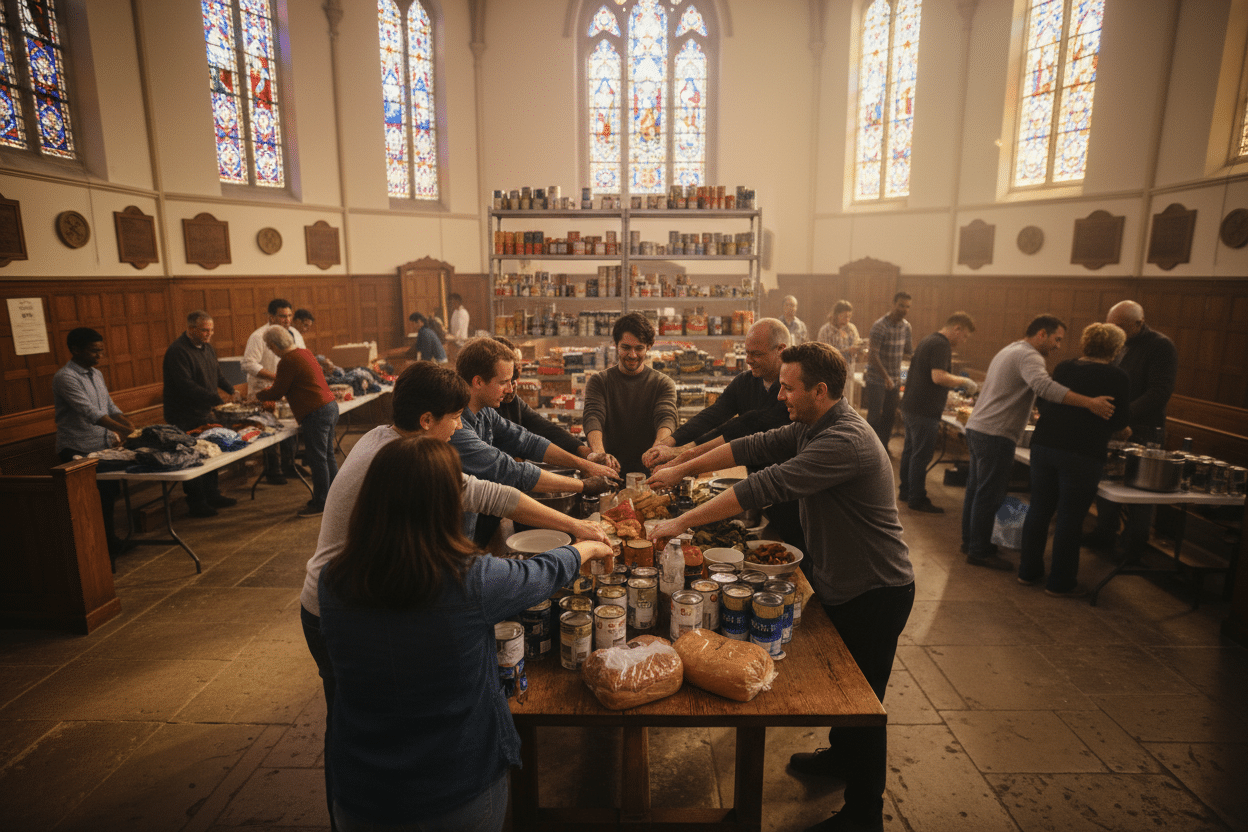
This is not merely institutional positioning. At the parish level, Episcopal churches are frequently embedded in their local communities through food pantries, homeless shelters, after-school programs, and refugee resettlement services. The tradition's theology of incarnation — the belief that God is present in the material world — drives a practical commitment to addressing material suffering.
Inclusion and progressive theological positions
The Episcopal Church has been at the forefront of debates about inclusion within mainline Protestantism. It ordained its first female priests in 1976 and elected its first female Presiding Bishop, Katharine Jefferts Schori, in 2006. The ordination of openly gay clergy and the blessing of same-sex unions have been official positions for years, culminating in the authorization of same-sex marriage rites.
These positions have generated significant friction within the broader Anglican Communion — the global network of churches in the Anglican tradition. Several conservative provinces, particularly in Africa, have broken or severely strained communion with the Episcopal Church over these issues. The tension is real and unresolved.
- Rich liturgical tradition with the Book of Common Prayer
- Democratic governance that includes laypeople
- Theological openness without abandoning sacramental practice
- Strong record of social and community engagement
- Welcoming stance toward LGBTQ+ individuals and families
- Declining membership across most dioceses
- Perceived as culturally elite or inaccessible
- Ongoing fractures within the global Anglican Communion
- Difficulty attracting younger, diverse congregants at scale
Episcopal Churches around the world
The Episcopal Church is one member of the Anglican Communion, a global fellowship of 42 member churches representing roughly 85 million Christians across more than 165 countries. The Archbishop of Canterbury serves as the symbolic head of this communion, but holds no direct authority over member churches. Each province is self-governing.
The Anglican Communion and its internal diversity
The diversity within the Anglican Communion is extraordinary. The Church of Nigeria, one of the largest Anglican bodies in the world, holds deeply conservative theological positions on sexuality and gender. The Church of England navigates its own internal tensions between traditionalists and reformers. The Anglican Church of Canada and the Church in Wales have moved in directions broadly similar to the Episcopal Church on questions of inclusion.
This means that "Episcopal" or "Anglican" worship looks and feels very different depending on where you encounter it. A Sunday morning service at an Episcopal church in Manhattan and a Sunday morning service in an Anglican parish in Nairobi share the same foundational texts but may feel like entirely different religious experiences. Language, music, preaching style, and community culture all shape the expression of a shared tradition.
The Episcopal Church's international presence
Beyond its role in the Anglican Communion, the Episcopal Church itself has congregations outside the United States. It includes dioceses in Colombia, Ecuador, Honduras, Haiti, the Dominican Republic, and several other countries, as well as the Convocation of Episcopal Churches in Europe. These international communities reflect the church's history of missionary activity and its ongoing commitment to a genuinely global identity.
Visitors are welcome at Episcopal services regardless of denomination or background. Most congregations practice an open table — meaning all baptized Christians are invited to receive communion, not only Episcopalians.
Challenges shaping the Episcopal Church today
The Episcopal Church is not a denomination in crisis, but it is a denomination in transition. Membership has declined steadily since the 1960s, mirroring broader trends in mainline Protestantism. Average Sunday attendance figures have dropped significantly over the past two decades. The demographic profile of most congregations skews older and whiter than the surrounding population.
Membership decline and the search for renewal
The causes are multiple and familiar to any observer of American religious life: secularization, competition from evangelical and non-denominational churches, geographic mobility, and the erosion of inherited religious identity among younger generations. The Episcopal Church has responded with various renewal initiatives, church planting efforts, and a renewed emphasis on evangelism — a word that sits somewhat awkwardly in a tradition more comfortable with liturgy than altar calls.
Some dioceses have found real success with fresh expressions of church — worshipping communities that meet in bars, community centers, or online, using Episcopal liturgy but in radically different formats. Whether these experiments can reverse structural decline or merely slow it remains an open question.
The fracture within the Anglican Communion
The internal tensions within the Anglican Communion represent a genuine long-term challenge. The formation of the Anglican Church in North America (ACNA) in 2009 — a conservative breakaway body that now claims several hundred thousand members — demonstrated that the fractures are not merely rhetorical. Congregations and entire dioceses have left the Episcopal Church, and the legal battles over church property have been expensive and painful.
The Episcopal Church has chosen to hold its course rather than seek unity through theological retreat. That is a coherent position, but it comes with costs. The communion-wide fractures are unlikely to heal in the near term, and the church's identity as part of a global Anglican family is genuinely complicated by the depth of the disagreements involved.
What remains constant, through all of this, is the tradition itself: the prayers that have been spoken for centuries, the sacramental life of the parishes, and the conviction that faith must engage the world as it actually is — not as it was, and not as we wish it to be.