The deacon is the third degree of Holy Orders in the Catholic Church, distinct from priests and bishops yet fully ordained clergy. Far from being a ceremonial title, the diaconate carries real liturgical, pastoral, and social responsibilities. Understanding what a deacon does — and why the role exists — reveals something fundamental about how the Catholic Church understands service itself.
When most people think of Catholic clergy, they picture priests celebrating Mass or bishops presiding over dioceses. The deacon rarely makes the headlines. But the diaconal ministry is woven into the structure of the Church from its earliest days, and today it represents one of the most dynamic and numerically significant expressions of ordained life in Catholicism. With over 50,000 permanent deacons active worldwide, the diaconate is not a footnote — it is a defining feature of the modern Church.
What is a deacon in the Catholic Church?
A deacon is an ordained minister who holds the first of the three degrees of Holy Orders, below the priesthood and episcopate. Ordination to the diaconate is a sacramental act, not a lay appointment or honorary title.
The word itself comes from the Greek diakonos, meaning "servant" or "minister." That etymology is not incidental — it defines the entire theological logic of the role. The deacon is, by definition, a servant of the Church, oriented toward service of the Word, the altar, and charity.
Biblical and early Church origins
The diaconate traces its roots to the Acts of the Apostles, specifically Acts 6:1-6, where the Apostles appointed seven men to serve the community's material needs, freeing the Apostles to focus on prayer and preaching. These seven — including Stephen and Philip — are traditionally regarded as the first deacons, though the text does not use that precise term. By the time of Paul's letters, the office of diakonos appears as a recognized ministry alongside that of bishop and elder.
Through the first centuries of Christianity, deacons held considerable authority. They managed the Church's charitable funds, administered care to the poor and sick, assisted at the Eucharist, and served as direct intermediaries between the bishop and the faithful. Their influence was significant enough that Church councils eventually began limiting their powers, a tension that would shape the diaconate's trajectory for centuries.
The decline and restoration of the diaconate
By the early medieval period, the diaconate had largely become a transitional step toward priesthood rather than a permanent vocation in its own right. Men were ordained deacons briefly before proceeding to priestly ordination. The theological depth of the original diaconate was not lost, but its practical expression was largely absorbed by the priesthood.
The restoration of the permanent diaconate came with the Second Vatican Council (1962-1965). The Council's document Lumen Gentium explicitly called for the revival of the diaconate as a stable, permanent ministry. For those interested in the broader historical development of the Catholic Church, this conciliar decision ranks among the most structurally significant reforms of the 20th century.
The specific functions and responsibilities of a deacon
The deacon's responsibilities fall across three interconnected domains: liturgy, proclamation, and charity. None of these is optional or secondary — all three belong to the fullness of diaconal service.
Liturgical functions at Mass and sacraments
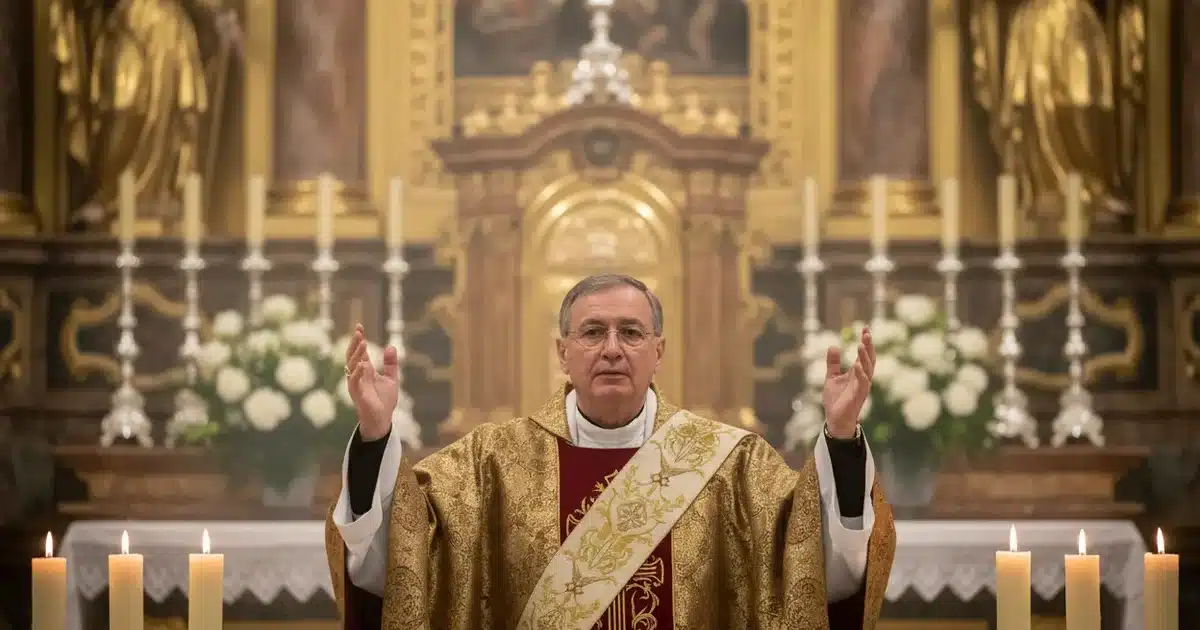
At Mass, the deacon has clearly defined roles. He proclaims the Gospel, delivers the homily (with the pastor's authorization), leads the Prayer of the Faithful, assists at the altar, and distributes Holy Communion. He can also preside at certain rites: Baptism, the Rite of Christian Burial, and the Rite of Marriage (when no priest is available). He may lead Liturgy of the Hours and distribute Communion to the homebound.
These are not decorative functions. In communities where priests are scarce — a growing reality in many parts of the world — the deacon becomes the primary sacramental presence available to the faithful on a regular basis.
Ministry of the Word and catechesis
Deacons are also ministers of the Word. Proclaiming the Gospel at Mass is their most visible act in this domain, but the responsibility extends further. Many deacons lead catechetical programs, RCIA (Rite of Christian Initiation of Adults), and adult faith formation. They preach, teach, and evangelize — not as a secondary activity but as a core expression of their ordination.
In the United States, deacons are authorized to preach at Mass when delegated by the pastor. In many parishes, their preaching ministry fills a genuine pastoral gap, particularly in communities served by a single priest managing multiple congregations.
Service to the poor and community outreach
The third pillar of diaconal service is charity — and this one is perhaps the most distinctive. The deacon is explicitly called to be a bridge between the Church and those on the margins. Historically, this meant managing the Church's material resources for the poor. Today, it translates into leading parish social outreach programs, working with homeless shelters, prison ministry, hospital chaplaincy, and advocacy for the vulnerable.
This dimension of the diaconate sets it apart from the priesthood in a meaningful way. While priests are primarily configured to the Eucharist and pastoral governance, the deacon is configured to service. The two are complementary, not competitive.
Permanent diaconate vs. transitional diaconate
This distinction is one of the most frequently misunderstood aspects of Catholic orders. Both are fully valid ordinations to the diaconate, but they serve entirely different purposes.
The transitional deacon
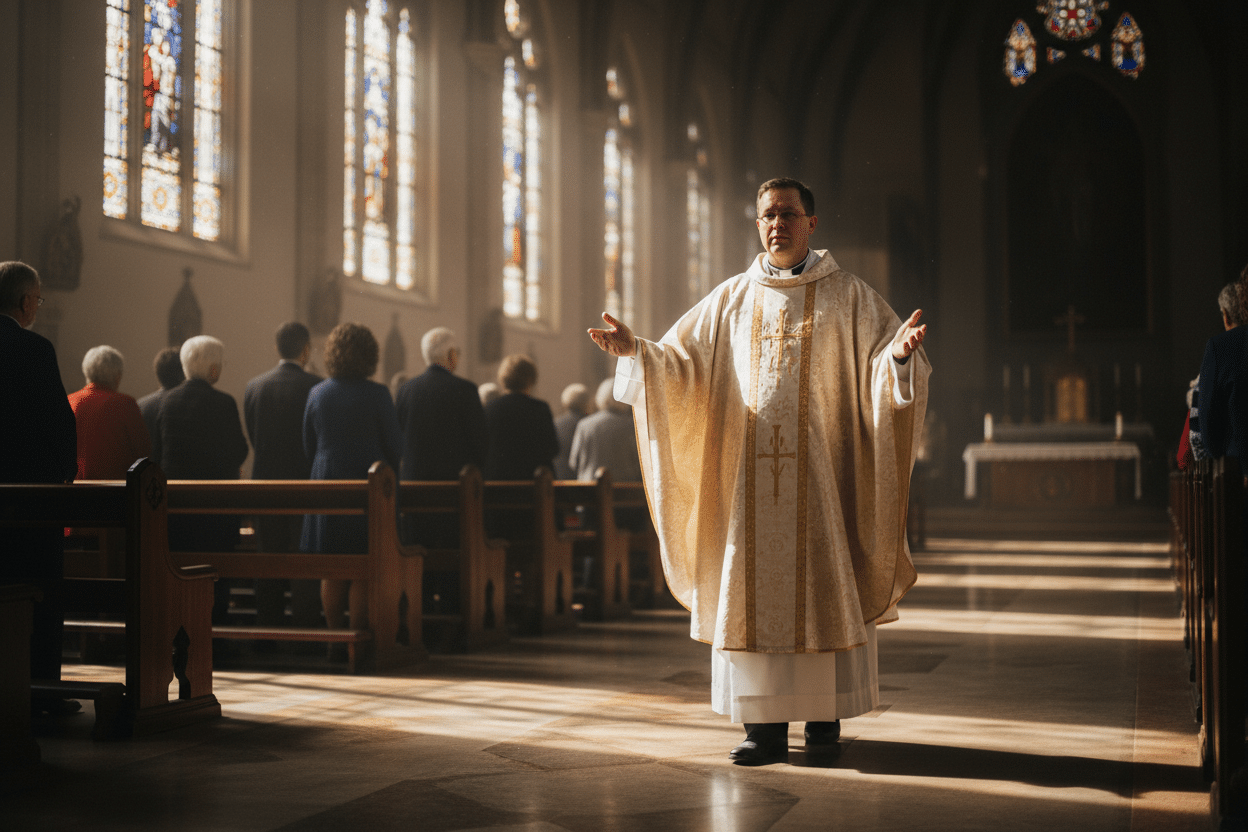
A transitional deacon is a seminarian preparing for priesthood. He is ordained to the diaconate — typically six months to a year before priestly ordination — as a required step in the process. During this period, he exercises diaconal ministry in a parish or other setting. But his intention from the outset is to proceed to the priesthood. The diaconate, for him, is a stage, not a destination.
Transitional deacons are celibate, as they are bound for the priesthood. Their diaconal ministry, though real, is understood as preparatory.
The permanent deacon
The permanent deacon has no intention of becoming a priest. He is ordained to the diaconate as a lifelong vocation. This is the form that was dormant for centuries and restored by Vatican II. Permanent deacons may be married — provided they were married before ordination. A permanent deacon who is widowed after ordination is generally not permitted to remarry, though exceptions exist in some circumstances.
- Lifelong ordained ministry
- Married men may be ordained
- Deep integration into parish and community life
- Strong presence in social and charitable work
- Temporary stage before priesthood
- Celibacy required
- Limited duration of diaconal ministry
- Focus remains on priestly formation
Permanent deacons typically hold secular employment alongside their ministry. A deacon might be a teacher, a lawyer, a social worker, or a tradesperson during the week and serve his parish on weekends and evenings. This dual life — rooted simultaneously in the world and in ordained ministry — is not a compromise. It is precisely what makes the permanent diaconate theologically distinctive.
The deacon's role in the contemporary Church
The diaconate has grown dramatically since Vatican II. In the United States alone, the number of permanent deacons has grown from near zero in 1967 to over 18,000 today, making the U.S. home to roughly a third of the world's permanent deacons. This expansion reflects both a genuine theological renewal and a practical response to the declining number of priests.
Responding to priest shortages and parish restructuring
As dioceses consolidate parishes and priests manage larger geographic territories, the deacon increasingly becomes the most consistent ordained presence in a community. He can visit the sick, lead wake services, baptize, witness marriages, and preach — covering much of what a parish community needs outside of Mass and confession.
This is not a workaround. The Catholic Church is explicit that the deacon is not a "substitute priest." But in practice, the diaconate is absorbing pastoral functions that were once exclusively priestly by necessity, and the Church is navigating that tension carefully.
Deacons at the intersection of Church and society
What makes the diaconate genuinely compelling as a contemporary ministry is its structural position at the boundary between the institutional Church and the wider world. Unlike priests, who live in rectories and are set apart by their lifestyle, most permanent deacons live ordinary lives. They shop at the same grocery stores, navigate the same financial pressures, and raise families alongside their parishioners.
This proximity to ordinary life gives diaconal service a particular credibility. When a deacon runs a food pantry or advocates for migrants, he does so as someone embedded in the same social reality as those he serves. The diaconate, in this sense, is the Church's most incarnational ministry.
Just as other Christian traditions grapple with questions of ministry and structure — from Episcopal churches to various Protestant denominations — the Catholic Church's diaconate represents a particular answer to the question of how ordained ministry can remain connected to the world it serves.
What deacons themselves say about their vocation
Personal testimonies from deacons consistently circle around two themes: the call to serve and the experience of living in two worlds simultaneously.
The experience of living "in between"
Many permanent deacons describe their ministry as a vocation of the threshold. They are ordained, but they live like laypeople. They serve at the altar, but they also work in offices, schools, and hospitals. This "in between" position, which might seem like a source of tension, is frequently described by deacons as its greatest gift.
A deacon who works as a nurse and also serves as a hospital chaplain brings something a priest chaplain cannot: the experience of the ward itself, the smell of the corridors, the weight of a twelve-hour shift. His ministry is not performed from outside the suffering — it emerges from within it.
The permanent diaconate is not a consolation prize for men who cannot become priests. It is a distinct, sacramental vocation with its own theological logic — rooted in service, embedded in the world, and essential to the Church’s mission on the margins.
The impact on parish communities
Deacons frequently report that their most significant pastoral work happens outside of Mass. Sitting with a grieving family before a funeral, accompanying someone through addiction recovery, leading a prison Bible study — these are the moments that define diaconal ministry in practice. The liturgical functions are visible; the pastoral ones are often invisible, but no less real.
For many Catholics, the deacon is the face of the Church they encounter most often in moments of vulnerability. And just as the orientation of sacred space reflects deeper theological commitments — as explored in discussions about how churches are designed — the deacon's position within the Church's structure reflects a deliberate theological choice: that service is not peripheral to the Gospel but at its very center. The diaconate exists precisely to make that visible.